
The Three Phases of a Professional Life: From Achievement to Burnout; and Back to Thriving
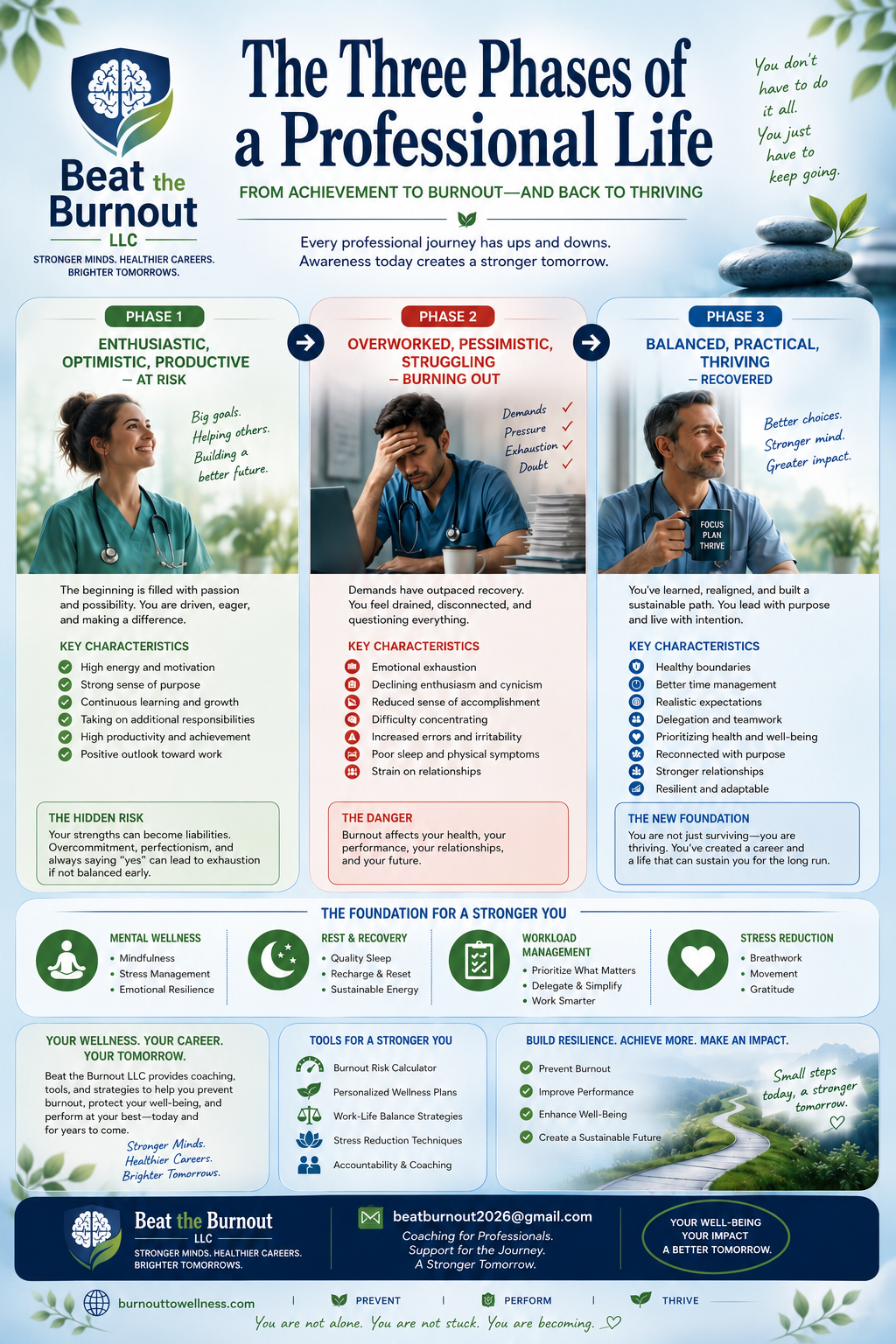
Most physicians and professionals don’t begin their careers burned out. They begin with passion.
They spend years preparing for their profession, driven by a desire to make a difference. They work hard, achieve remarkable milestones, and embrace new opportunities. Yet, somewhere along the journey, many find themselves exhausted, detached, and wondering what happened.
Burnout rarely occurs overnight. It is a gradual transition through recognizable phases. Understanding these phases can help individuals and organizations identify problems early and create a path toward sustainable success.
Phase 1: Enthusiastic, Optimistic, Productive — At Risk
This is where most careers begin.
There is excitement about learning, taking on challenges, and making an impact. Professionals in this phase often say “yes” to every opportunity because they genuinely enjoy contributing. Long hours don’t feel burdensome because the work is meaningful.
Characteristics include:
High energy and motivation
Strong sense of purpose
Continuous learning and career growth
Taking on additional responsibilities
High productivity and achievement
Positive outlook toward work
Ironically, this phase also carries the greatest hidden risk.
The qualities that make someone successful—conscientiousness, perfectionism, empathy, reliability, and a strong work ethic—are the very traits that can increase vulnerability to burnout. Success often leads to more responsibilities rather than more support. Promotions bring administrative work. High performers become the people everyone depends on.
Warning signs begin to appear:
Skipping meals or exercise
Poor sleep
Neglecting family and hobbies
Difficulty disconnecting from work
Constant availability through emails and messages
Everything still appears successful from the outside, but the foundation is beginning to weaken.
Phase 2: Overworked, Pessimistic, Struggling — Burning Out
As demands continue to increase without adequate recovery, the body and mind begin to protest.
This phase is characterized not by laziness or lack of resilience, but by chronic imbalance.
Professionals often experience:
Emotional exhaustion
Declining enthusiasm
Cynicism or depersonalization
Reduced sense of accomplishment
Difficulty concentrating
Increased errors
Irritability
Sleep disturbances
Physical symptoms such as headaches, fatigue, or hypertension
Many begin questioning whether they chose the right profession.
Ironically, they often work even harder to compensate, hoping that pushing through will solve the problem. Instead, this creates a vicious cycle of declining performance and increasing effort.
Relationships suffer.
Patients, colleagues, coworkers, friends, and family may notice changes before the individual recognizes them.
Without intervention, burnout may lead to depression, anxiety, substance misuse, career dissatisfaction, or leaving the profession altogether.
Phase 3: Balanced, Practical, Thriving — Recovered
Recovery from burnout does not mean returning to the lifestyle that caused it.
It means creating a new definition of success.
Professionals who successfully recover often become wiser rather than simply happier. They recognize that sustained excellence requires sustained well-being.
Characteristics include:
Healthy professional boundaries
Better time management
Realistic expectations
Delegation when appropriate
Prioritizing physical and mental health
Reconnecting with purpose
Investing in meaningful relationships
Greater resilience during stressful periods
Interestingly, many professionals in this phase remain highly productive. The difference is that productivity is no longer fueled by constant sacrifice.
They understand that saying “no” to some commitments allows them to say “yes” to what matters most.
Rather than chasing every opportunity, they choose opportunities aligned with their values and long-term goals.
Recovery Is Not a Straight Line
People often move back and forth between these phases throughout their careers.
Major life events, organizational changes, staffing shortages, administrative burdens, family responsibilities, or health issues can push even thriving professionals back toward burnout.
The goal is not perfection.
The goal is awareness.
Recognizing early warning signs allows professionals to make course corrections before burnout becomes severe.
What Organizations Can Do
While individual habits matter, burnout is not simply an individual problem.
Healthcare systems and organizations can help by:
Reducing unnecessary administrative burden
Improving workflow efficiency
Providing adequate staffing
Promoting psychological safety
Encouraging flexible scheduling when possible
Supporting coaching and professional development
Recognizing that clinician well-being directly impacts patient care, employee retention, and organizational performance
The Bottom Line
A successful career is not defined by how much you can endure. The healthiest professionals are not those who never experience stress. They are those who learn to balance ambition with recovery, excellence with boundaries, and achievement with well-being.
Perhaps the true goal of a professional career is not simply to avoid burnout—but to evolve.
To move from enthusiasm, through challenge, into a sustainable way of living and working where both performance and well-being can coexist. That is what thriving looks like.
