
Brain Health: The Investment With the Greatest Return
-
Estimated reading time: 6–7 minutes
Summary:
The brain is one of a person’s most valuable professional assets, supporting attention, memory, judgment, problem-solving, emotional regulation, and the ability to use acquired knowledge and experience effectively.
Healthy habits can produce compounding benefits for brain health. Consistent sleep, physical activity, balanced nutrition, focused attention, and meaningful recovery reinforce one another and support long-term cognitive performance.
Burnout can gradually weaken professional effectiveness, making concentration, decision-making, emotional regulation, and engagement with work more difficult. Individual wellness practices can help, but organizations must also address excessive workloads, inadequate staffing, and unhealthy workplace expectations.
Investing in brain health supports more than productivity. It can protect career longevity, relationships, emotional well-being, physical health, and the ability to enjoy life outside work.
Small, repeatable actions can provide meaningful long-term value, including protecting sleep, taking movement breaks, eating balanced meals, limiting unnecessary notifications, setting work boundaries, maintaining social connections, and seeking professional support when needed.
Ultimately, protecting brain health means protecting the asset behind every achievement. A healthy brain helps people think clearly, work sustainably, remain emotionally present, and continue pursuing meaningful careers without sacrificing their overall well-being.
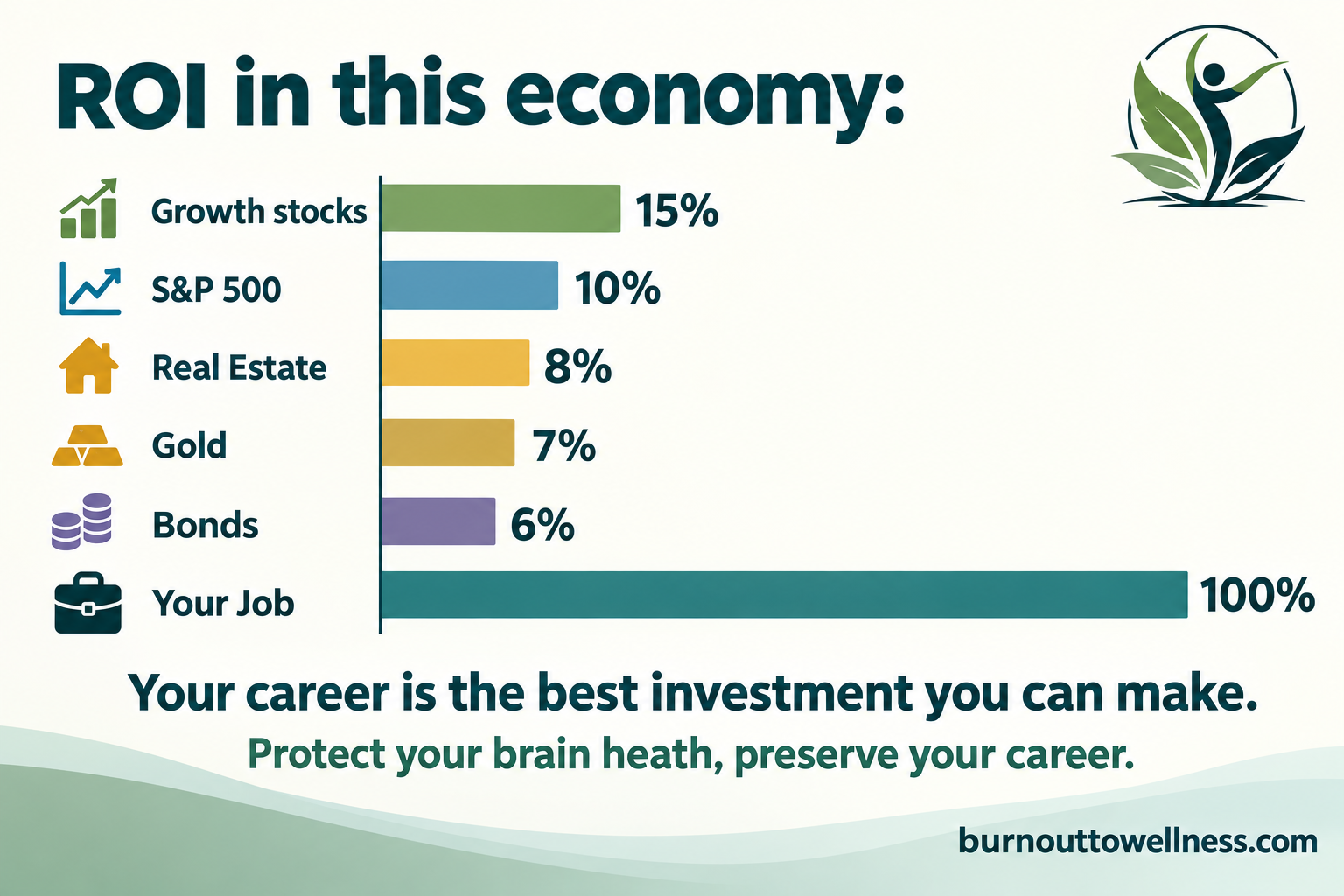
When people think about investing, they often think about stocks, real estate, gold, or retirement accounts. Each investment is intended to produce something valuable in the future—financial security, stability, or growth.
However, one asset influences our ability to earn, make decisions, build relationships, enjoy life, and benefit from every other investment we make: the brain.
Brain health does not produce a return that can be summarized by a single percentage. Its value appears in clearer thinking, stronger emotional regulation, better judgment, greater resilience, and the ability to remain engaged in a meaningful career.
For professionals whose work depends on attention, empathy, communication, and complex decision-making, protecting the brain may be one of the most valuable long-term investments possible.
Your brain is your professional capital
Our careers rely on more than education, technical knowledge, or experience. They also depend on the brain’s ability to access and apply those resources.
Attention allows us to identify what matters. Memory connects current information with previous experience. Executive function helps us organize, prioritize, and solve problems. Emotional regulation influences how we respond to pressure and interact with others.
When these abilities are supported, people can work efficiently and adapt to challenges. When they are repeatedly strained by inadequate sleep, chronic stress, poor nutrition, inactivity, or constant interruption, even familiar responsibilities may become more difficult.
A person may technically possess the same knowledge and qualifications but struggle to use them effectively when mentally exhausted.
That is why brain health should not be treated as separate from professional performance. It is part of the infrastructure that makes performance possible.
The compounding return of healthy habits
Financial investments may grow through compounding, as previous gains create the foundation for future growth. Healthy habits can work in a similar way.
One night of restorative sleep may improve attention and emotional regulation the next day. Better concentration may make work more efficient, creating time for exercise or a healthy meal. Physical activity may reduce stress and improve sleep quality, making the next day easier to manage.
These benefits can reinforce one another.
The opposite can also happen. Poor sleep may increase fatigue and reduce motivation to exercise. A stressful day may lead to skipped meals, excessive caffeine, or late-night scrolling. Those choices may then interfere with the following night’s sleep.
Over time, small patterns can move a person toward greater resilience or deeper exhaustion.
The National Institute on Aging recommends several practices that support cognitive health, including managing physical health conditions, eating well, remaining physically active, obtaining adequate sleep, staying socially connected, and keeping the mind engaged. National Institute on Aging
The goal is not to perform every habit perfectly. It is to make regular deposits into the systems that allow the brain to recover and function effectively.
Sleep protects tomorrow’s performance
Sleep is one of the clearest examples of a long-term investment that also produces an immediate return.
During sleep, the brain processes information, organizes memories, regulates emotions, and supports important biological maintenance. Adequate rest helps us concentrate, learn, solve problems, and respond more thoughtfully to stress.
Sacrificing sleep may appear to create more working hours, but the additional time may come with slower thinking, reduced accuracy, weaker judgment, and greater emotional reactivity.
This creates a form of professional debt. A person gains time at night but may repay it the next day through lower efficiency and increased mental effort.
Protecting sleep therefore is not laziness or a lack of ambition. It is a way of preserving the cognitive abilities on which sustainable performance depends.
Exercise strengthens the brain and body
Physical activity is often viewed primarily as an investment in cardiovascular fitness, strength, or weight management. Its benefits also extend to mood, sleep, energy, and cognitive health.
Exercise supports blood flow and gives the nervous system an opportunity to shift away from continuous mental work. Even a brief walk can interrupt prolonged sitting, reduce physical tension, and create psychological distance from a difficult task.
Movement does not need to involve an extreme routine. Walking, swimming, cycling, dancing, strength training, or participating in a recreational sport can all contribute to health.
The best investment is usually the one a person can maintain. A short, consistent activity may provide more lasting value than an intense program that becomes impossible to sustain.
Nutrition supplies the brain’s operating resources
The brain requires a steady supply of energy and nutrients. Regular, balanced meals can support concentration and more stable energy throughout the day.
A brain-supportive eating pattern generally includes vegetables, fruits, whole grains, healthy fats, and appropriate sources of protein. Hydration is also important because fatigue and difficulty concentrating can sometimes worsen when fluid intake is inadequate.
Nutrition is not about identifying one perfect “brain food.” It is about consistently providing the resources the brain and body need.
Skipping meals, relying heavily on highly processed foods, or using caffeine to compensate for exhaustion may provide short-term convenience, but these approaches are not substitutes for nourishment and recovery.
Like financial planning, healthy nutrition works best when it is practical. Preparing simple meals, keeping healthy snacks available, and making one better choice at a time may be more effective than pursuing a restrictive plan that cannot be maintained.
Attention is a limited resource
Time is not the only resource worth protecting. Attention also has value.
Every notification, message, meeting, and interruption competes for a portion of the brain’s processing capacity. When the brain repeatedly switches between tasks, mental energy is spent disengaging, redirecting attention, and reconstructing the original thought process.
This can create the experience of being busy all day without making meaningful progress.
Protecting attention may involve turning off nonessential notifications, setting aside periods for focused work, checking email at planned times, or creating screen-free transitions between work and home.
These boundaries are not barriers to productivity. They help ensure that valuable cognitive resources are spent intentionally rather than consumed by every incoming demand.
What burnout takes from the brain
The World Health Organization describes burnout as an occupational phenomenon resulting from chronic workplace stress that has not been successfully managed. Its dimensions include exhaustion, increased mental distance or cynicism toward work, and reduced professional effectiveness. World Health Organization
In investment terms, burnout can gradually erode professional capital.
A person may have spent years developing knowledge, judgment, technical skills, and relationships. Under prolonged stress without adequate recovery, it may become harder to access those abilities consistently. Concentration declines, decisions require more effort, and work that once felt meaningful may begin to feel emotionally distant.
Healthcare professionals may be particularly vulnerable because their work demands sustained attention, empathy, accuracy, and responsibility. Long shifts, administrative pressure, inadequate staffing, and frequent exposure to suffering can create demands that exceed opportunities for recovery.
Protecting brain health cannot eliminate every cause of burnout. Sleep, exercise, and nutrition cannot repair an unhealthy workplace by themselves. Organizations must also address workload, staffing, leadership, psychological safety, and employees’ ability to disconnect.
Individual and organizational investments must work together.
Career longevity is more than staying employed
A long career is not valuable simply because it lasts many years. Career longevity also involves maintaining the ability to perform meaningful work without sacrificing physical health, emotional well-being, or important relationships.
Someone may remain employed while functioning in a constant state of exhaustion. That is survival, not sustainability.
Investing in brain health means protecting the abilities that allow a person to continue contributing with clarity, curiosity, empathy, and sound judgment. It also means preserving enough energy to have a meaningful life outside work.
The return is not measured only in promotions, productivity, or income. It may also appear as greater presence with family, improved emotional stability, better health, and the freedom to conti
