
The Importance of Sleep, Exercise, and Diet in Cardiovascular Health
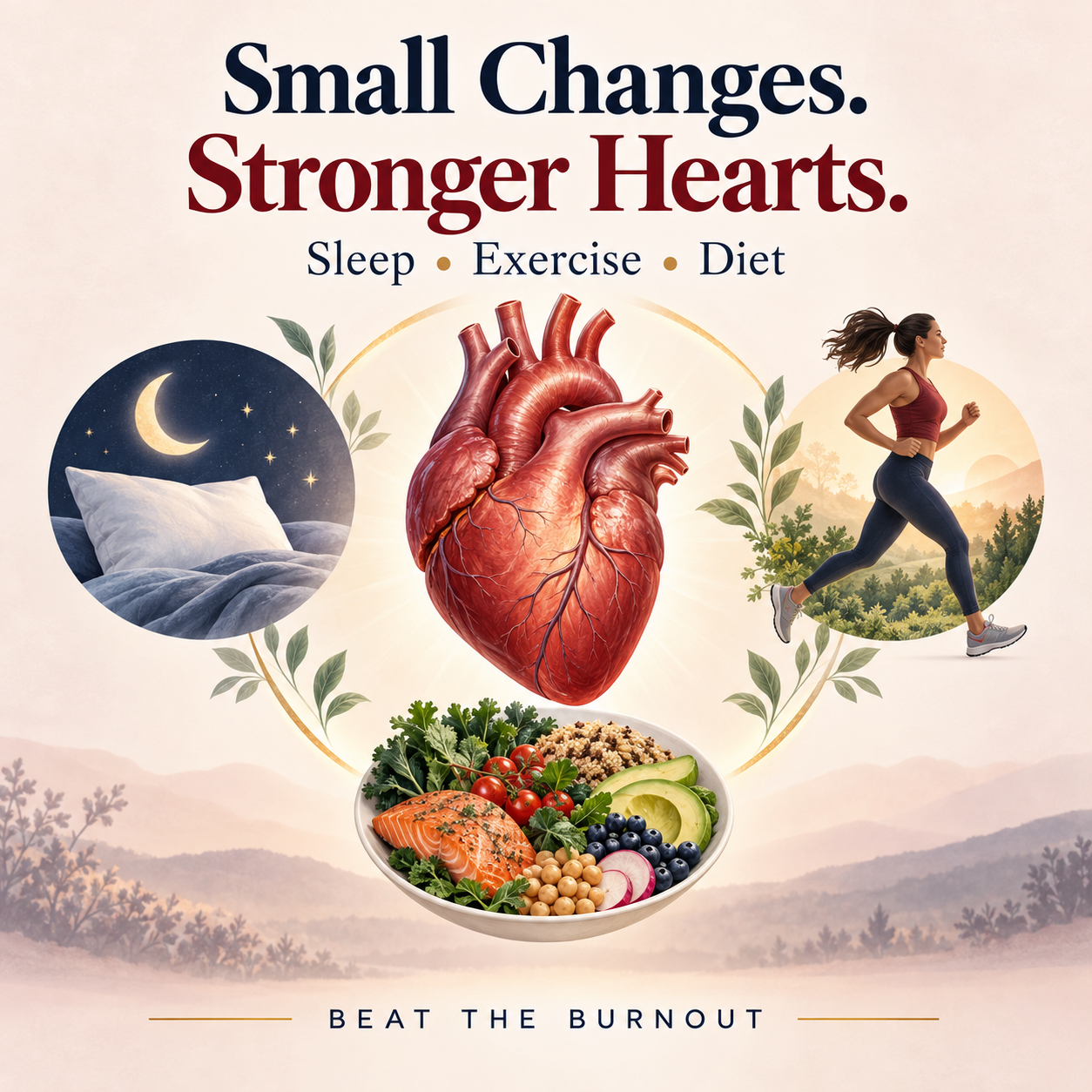
When cardiovascular health is discussed, the conversation often centers on medications, procedures, blood pressure readings, and cholesterol levels. These tools are essential, but they are only part of prevention.
Sleep, physical activity, and nutrition—sometimes grouped under the acronym SPAN—can meaningfully influence the risk of heart attack, stroke, and heart failure. A recent UK Biobank analysis suggests that these behaviors may be especially powerful when improvedart may not require an immediate, dramatic lifestyle transformation. Small, sustainable changes can add up.
From the Framingham Heart Study to UK Biobank
Much of our foundational knowledge about cardiovascular risk came from the Framingham Heart Study. Beginning in 1948 with 5,209 participants, Framingham helped identify major risk factors such as high blood pressure, elevated cholesterol, smoking, obesity, diabetes, and physical inactivity.
The UK Biobank represeon health research. Its broader cohort includes more than 500,000 adults and contains extensive information about participants’ health, lifestyle, and medical outcomes.
For this specific SPAN udy all 500,000 participants. They evaluated 53,242 adults who had the necessary sleep, physical-activity, dietary, and health-outcome data. Participants had a median age of 63, and researchers followed them for a median of eight years.
During follow-up, 2,034 participants experienced a major adverse cardiovascular event, or MACE. These events included 932 myocardial infarctions, 584 strokes, and 518 cases of heart failure.
What did the researchers measure?
The researchers examined three interconnected health behaviors:
Daily sleep duration
Moderate-to-vigorous physical activity, or MVPA
Overall diet quality
Sleep and physical activity were estimated using wrist-worn accelerometers. Diet was evaluated using participant questionnaires and converted into a diet quality score, or DQS.
Instead of examining each behavior separately, the researchers studied how different combinations of sleep, movement, and nutrition were associated with cardiovascular outcomes.
This is important because lifestyle behaviors rarely occur in isolation. Sleeping poorly may make exercise and healthy eating more difficult. Physical activity may improde the energy needed to remain active.
Small combined improvements were associated with lower risk
One of the study’s most encouraging findings involved relatively modest differences in daily habits.
A combined increase of approximately:
11 minutes of sleep per day
4.5 minutes of moderate-to-vigorous physical activity per day
Three points on the study’s diet quality scale
was associated with a 10% lower risk of a major adverse cardiovascular event.
The key word is combined. The study did not establish that adding only 11 minutes of sleep, by itself, will reduce an individual’s cardiovascular risk by exactly 10%. The lower risk was associated with simultaneous differences across sleep, exercise, and diet.
Still, the finding challenges the “all-or-nothing” approach to health. People may assume they must immediately begin an intense exercise program, completely transform their diet, and develop a perfect sleep routine. When those goals feel unrealistic, they may avoid making any changes.
This research suggests that small improvements across several areas may be a practical place to begin.
The optimal SPAN pattermbination associated with the lowest cardiovascular risk in their analysis:
Between 8.0 and 9.4 hours of sleep per day
Between 42 and 104 minutes of moderate-to-vigorous activity per day
A diet quality score between 32.5 and 50
Compared with participants in the lowest categories for all three behaviors, people in this optimal group had a 57% lower associated risk of MACE. The reported hazard ratio was 0.43, with a 95% confidence interval of 0.30 to 0.62.
This does not mean that every person must achieve these exact numbers. Sleep needs, physical abilities, medical conditions, and nutritional requirements vary. The highest activity range may also be unrealistic or inappropriate for some patients without medical guidance.
The broader lesson is that consistently supporting all three behaviors was associated with substantially better cardiovascular outcomes.
Why sleep matters to the heart
Sleep is not simply a period of inactivity. It helps regulate blood pressure, metabolism, inflammation, hormonal activity, and the autonomic nervous system.
Repeatedly shortened or disrupted sleep can place additional strain on cardiovascular and metabolic systems. Poor sleep may also indirectly affect heart health by increasing fatigue, reducing motivation to exercise, and influencing appetite and food choices.
Improving sleep may begin with maintaining consistent sleep and wake times, reducing late-night stimulation, limiting caffeine later in the day, and creating an environment that supports rest.
Patients who experience persistent insomnia, severe daytime sleepiness, loud snoring, gasping, or pauses in breathing during sleep may need further evaluation. Obstructive sleep apnea and other sleep disorders can affect cardiovascular health and should not be dismissed as ordinary tiredness.
Why physical activity matters
Moderate-to-vigorous physical activity strengthens the heart, supports circulation, improves metabolic health, and can help manage blood pressure, cholesterol, stress, and body weight.
Importantly, activity does not need to happen only in a gym. Brisk walking, cycling, swimming, dancing, active household tasks, and recreational sports can all raise the heart rate.
For someone who is mostly inactive, adding approximately five minutes of purposeful movement may feel far more achievable than immediately committing to a long daily workout.
That small beginning can become a foundation. Five minutes may gradually become ten, and ten may eventually become twenty. Sustainable progress is generally more valuable than an ambitious routine that is abandoned after a few days.
Why diet quality matters
A heart-supportive diet is not defined by one “superfood.” It is a consistent dietary pattern that emphasizes vegetableealthy fats, and appropriate sources of protein while limiting excessive sodium, added sugar, and highly processed foods.
In practical terms, improving diet quality could begin with adding vegetables to one meal, replacing a refined grain with a whole grain, selecting water instead of a sugary drink, or preparing more meals at home.
The UK Biobank summary translated the study’s small dietary improvement into roughly an additional quarter cup of vegetables per day.
These changes may appear minor, but they are often easier to sustain than restrictive diets. The purpose is not perfection. It is to move the overall eating pattern in a healthier direction.
What the study cannot prove
This was a prospective observational study. It identified associations, but it did not prove that the measured lifestyle changes directly caused the reductions in cardiovascular events.
People with healthier routines may differ from other participants in ways that are difficult to measure completely. The researchers adjusted for several relevant factors, but residual confounding may remain.
Sleep and activity were also measured through wee diet was based on questionnaires. These approaches are valuable for studying large populations, but they cannot capture every detail of a person’s habits over many years.
The findings should therefore be understood as strong evidence supporting lifestyle-focused prevention—not as a guarantee that following a particular formula will produce an exact reduction in risk. UK Biobank’s own summary notes that the study shows trends and cannot establish cause and effect.
Lifestyle and medication should work together
The 57% lower associated risk is striking, but it should not be described as proof that lifestyle changes are “better than most medications.” This was not a randomized trial comparing a lifestyle program directly with drug therapy.
Medications can be lifesaving and remain essential for many patients with hypertension, high cholesterol, diabetes, heart failure, or established cardiovascular disease. Patients should never stop or reduce prescribed medication without consulting their healthcare professional.
The better message is that lifestyle and medical treatment are complementary. Medication can manage specific risks, while sleep, exercise, and nutrition influence several interconnected systems throughout the body.
Physicians and advanced practice providers should consistently discuss lifestyle behaviors as a central component of cardiovascular prevention—not merely as an afterthought once medication has been prescribed.
How does this relate to burnout?
Sleep, exercise, and nutrition also play an important role in burnout prevention and recovery.
Chronic workplace stress can disrupt sleep, reduce motivation to exercise, and make convenient, less nutritious foods more appealing. In turn, inadequate sleep, physical inactivity, and inconsistent nutrition may reduce concentration, emotional regulation, and the ability to cope with daily demands. This can create a cycle in which stress weakens healthy routines, and weakened routines make stress even harder to manage.
Healthcare professionals may be especially vulnerable. Long shifts, unpredictable schedules, administrative demands, and the emotional weight of patient care can leave little time or energy for recovery. When these pressures continue without adequate support, even highly committed clinicians may experience exhaustion, detachment, or a declining sense of effectiveness.
Small improvements in sleep, movement, and diet can help restore energy and resilience. However, lifestyle advice must not imply that burnout is solely an individual failure. Exercise, healthy eating, and adequate sleep cannot compensate for chronic understaffing, excessive workloads, or workplace cultures that discourage rest.
Organizations share responsibility for creating schedules, staffing models, and environments that allow meaningful recovery. Addressing burnout requires both healthier personal routines and healthier working conditions.
Small changes can begin today
The most useful lesson from this study is not that everyone must immediately achieve an “optimal” lifestyle. It is that meaningful progress may begin with changes small enough to feel manageable:
Go to bed 10–15 minutes earlier
Add a brief brisk walk to the day
Include another serving of vegetables or whole grains
Build changes gradually instead of attempting everything at once
Track progress by consistency rather than perfection
Discuss safe, individualized goals with a healthcare professional
The heart is affected by what we repeatedly do—not only by what happens inside a clinic.
Medications and medical care remain important, but cardiovascular prevention must also include the hours patients spend sleeping, moving, and eating. When clinicians help patients make realistic improvements in all three areas, lifestyle counseling becomes a meaningful part of treatment.
Better cardiovascular health may not always begin with a dramatic intervention. Sometimes, it begins with 11 more minutes of sleep, five more minutes of movement, and one healthier choice at the next meal.
