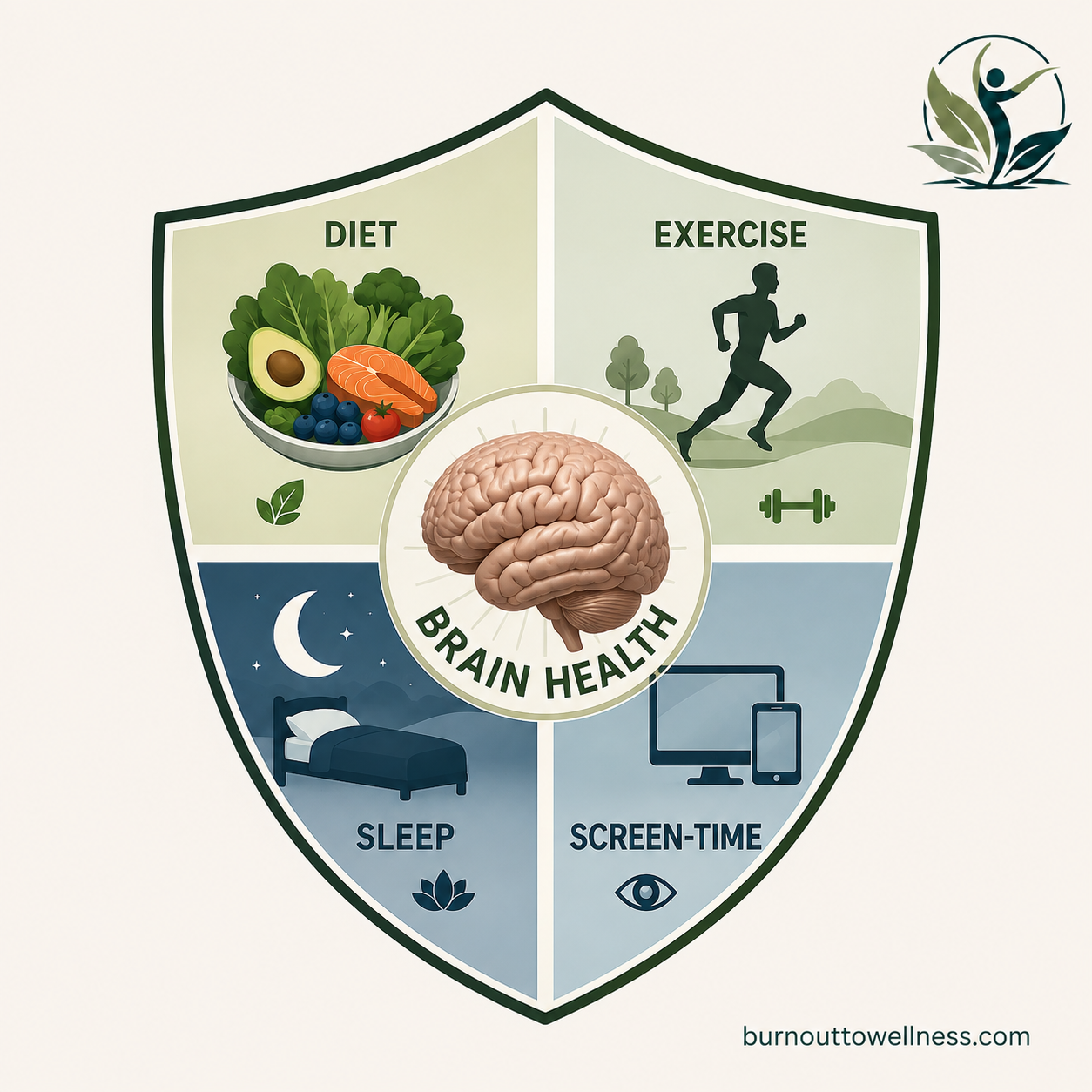
The Four Pillars of Brain Health: Diet, Exercise, Sleep, and Screen Time
The brain is constantly working. It manages memory, attention, emotions, decision-making, movement, and countless biological processes—even when we are resting.
Like every other part of the body, the brain depends on daily care. Four habits are especially important: eating a balanced diet, staying physically active, getting restorative sleep, and using screens intentionally.
These habits do not operate independently. Poor sleep can make healthy eating and exercise more difficult. Excessive screen time may interfere with rest. Physical activity can improve sleep and reduce stress, while balanced nutrition provides the energy needed to think and perform effectively.
Together, these four pillars create a practical foundation for protecting brain health, strengthening resilience, and preventing burnout.
Pillar One: Diet
The brain requires a consistent supply of energy and nutrients to function effectively. Although it represents only a small percentage of total body weight, it uses a significant amount of the body’s energy.
What we eat can influence concentration, mood, energy levels, cardiovascular health, and long-term cognitive function. However, brain-healthy eating is not about finding one “miracle” food or following a perfect diet. It is about building a balanced and sustainable pattern.
Meals containing vegetables, fruits, whole grains, healthy fats, and sources of protein can help provide steady energy throughout the day. Foods such as leafy greens, berries, beans, nuts, fish, and olive oil contain nutrients that support overall health.
Hydration also matters. Even mild dehydration may contribute to headaches, tiredness, and difficulty concentrating. Keeping water available throughout the day can be a simple way to support mental and physical performance.
Highly processed foods and foods containing large amounts of added sugar may provide a quick burst of energy followed by a noticeable decline. Skipping meals can create similar fluctuations, leaving a person feeling tired, distracted, or irritable.
Caffeine may temporarily improve alertness, but it cannot replace proper nutrition or sleep. Consuming too much—especially later in the day—may increase anxiety or make restorative sleep more difficult.
The goal is not dietary perfection. Consistently giving the brain adequate fuel is more valuable than occasionally eating a food marketed as a “brain booster.”
Pillar Two: Exercise
Physical activity is not only beneficial for muscles and cardiovascular health. It also supports the brain.
Exercise increases blood flow, supports mood, and can improve sleep quality. Regular movement is also associated with better long-term cognitive health and may help the brain remain adaptable as we age.
Movement can have immediate benefits as well. A short walk or stretching break may reduce physical tension, restore attention, and create separation from a stressful task. This can be particularly valuable for people who spend long hours sitting or working at a computer.
Exercise does not need to be extreme to be meaningful. Walking, swimming, cycling, dancing, strength training, recreational sports, and even active household tasks can contribute to physical and neurological health.
The most effective activity is usually one that can be performed consistently. Someone who dislikes running does not need to become a runner to support their brain. Enjoyable and realistic movement is more likely to become a lasting habit.
For busy professionals, exercise is often one of the first activities removed from the schedule. However, treating movement as optional may eliminate an important source of stress relief and recovery.
Even brief periods of activity matter. Taking the stairs, walking during a phone call, stretching between meetings, or going outside during lunch can help interrupt long periods of inactivity.
Pillar Three: Sleep
Sleep is one of the brain’s most important recovery processes.
While we sleep, the brain organizes memories, processes emotions, regulates biological functions, and prepares us to think clearly the next day. Restorative sleep supports attention, learning, reaction time, judgment, and emotional stability.
When sleep is repeatedly shortened or disrupted, the effects can accumulate. Familiar tasks may require more effort, details may be easier to overlook, and minor frustrations may feel more serious.
Poor sleep can also weaken the other pillars of brain health. A tired person may have less energy to exercise, rely more heavily on caffeine, crave convenient foods, and spend more time passively scrolling.
Most adults generally need at least seven hours of sleep per night, although individual needs vary. Quality matters as much as quantity. Someone may spend enough time in bed but still receive inadequate rest because of frequent awakenings, stress, pain, irregular schedules, or an untreated sleep disorder.
Helpful sleep practices may include maintaining reasonably consistent sleep and wake times, getting natural light earlier in the day, limiting caffeine later in the afternoon, and creating a dark, quiet sleeping environment.
A short evening routine can also signal that the workday is ending. Dimming lights, preparing for the next morning, reading, stretching, or placing the phone away from the bed may make it easier to transition into rest.
Persistent insomnia, severe daytime sleepiness, loud snoring, gasping during sleep, or observed pauses in breathing may warrant professional evaluation.
Sleep is not wasted time. It is essential maintenance for the brain and body.
Pillar Four: Screen Time
Screens are an unavoidable part of modern life. They allow us to work, learn, communicate, and access valuable information. The goal is therefore not to eliminate screens, but to use them more intentionally.
Problems can arise when screen use becomes continuous. Notifications, emails, news, entertainment, and social media compete for attention throughout the day. Even brief interruptions can force the brain to stop, redirect attention, and reconstruct its previous train of thought.
This constant switching may reduce concentration and make mental work feel more exhausting. It can also create the feeling that every message requires an immediate response.
Screen use may become especially disruptive when it replaces sleep, movement, in-person connection, or genuine downtime. Late-night scrolling can delay bedtime and expose the brain to stimulating or stressful content precisely when it should be preparing to rest.
Not all screen time has the same effect. Completing meaningful work, speaking with family, and learning a skill are different from repeatedly checking notifications without a clear purpose.
Intentional screen habits may include turning off nonessential alerts, keeping phones away during focused work, taking regular visual and movement breaks, and establishing screen-free periods before bed.
It may also help to ask: “Am I using this device for a purpose, or am I reaching for it automatically?”
The objective is not to feel guilty about technology. It is to make sure technology remains a tool rather than a continuous source of cognitive demand.
How the four pillars work together
Brain health is rarely determined by one isolated behavior. Diet, exercise, sleep, and screen time continually influence one another.
A person who exercises regularly may sleep more effectively and experience improved mood. Better sleep may make it easier to prepare balanced meals and resist unnecessary digital distractions. Reducing late-night screen use may create more time for rest, while taking movement breaks can interrupt long periods of sitting and scrolling.
The opposite pattern can also develop. Workplace stress may lead to late-night screen use, which reduces sleep. Fatigue may then increase reliance on caffeine or convenient foods and make exercise feel less manageable.
This is why attempting to change everything at once can be overwhelming. Improving one pillar may make the others easier to support.
Small actions can begin that process:
Add one balanced meal or snack to the workday
Take a 10-minute walk between responsibilities
Protect a consistent bedtime
Turn off one category of unnecessary notifications
Keep screens away during meals
Replace a few minutes of evening scrolling with a calming routine
Drink water regularly throughout the day
Schedule movement as deliberately as a meeting
These actions may appear simple, but repeated habits can shape how the brain functions and recovers over time.
How does this relate to burnout?
Burnout often develops when prolonged demands exceed the opportunity for meaningful recovery.
A person experiencing burnout may feel emotionally exhausted, mentally distant from work, and less effective in responsibilities that were once manageable. The four pillars of brain health can influence how well a person tolerates and recovers from stress.
Poor nutrition can contribute to unstable energy. Inactivity can remove an important outlet for stress. Inadequate sleep reduces concentration and emotional resilience, while constant screen exposure can prevent the mind from fully disconnecting from work.
Strengthening these habits can support recovery, but personal wellness practices cannot solve burnout caused by excessive workloads, inadequate staffing, unhealthy leadership, or unrealistic expectations.
Organizations must also create conditions that allow people to take breaks, disconnect from work, access healthy options, move during the day, and obtain adequate rest.
Burnout prevention is most effective when individual habits and organizational responsibility work together.
Build a healthier brain one pillar at a time
Brain health is not built through a single perfect routine. It is supported by ordinary decisions repeated over time.
A balanced diet provides fuel. Exercise strengthens the systems that support the brain. Sleep creates time for recovery, and intentional screen use protects attention.
No one will manage all four pillars perfectly every day. The purpose is not to create another demanding checklist. It is to notice which area is placing the greatest strain on the brain and choose one realistic improvement.
This week, consider asking yourself:
Am I giving my brain consistent, nourishing fuel?
Am I moving enough to support my body and relieve stress?
Am I protecting the sleep I need to recover?
Am I controlling my screen use, or is it controlling my attention?
Beating burnout does not always begin with a dramatic change. Sometimes, it begins with a meal, a walk, a good night’s sleep, or the decision to put down the phone.
Protecting these four pillars today can improve how we think, feel, and perform now while supporting the health of the brain we will depend on for years to come.