
How can you address your burnout?
· Every person’s story is unique and there is no one-size-fits-all way of addressing it.
· This is my approach when a colleague reaches out to me with burnout symptoms. It may help you find the underlying cause of your burnout and may help you identify ways of addressing it.
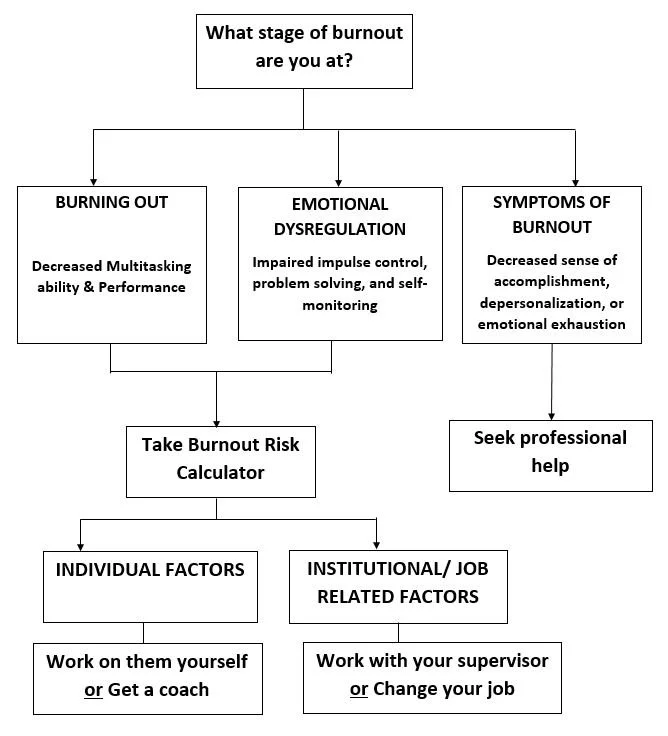
Addressing individual factors:
Improving working memory:
• Increasing focus, reducing multitasking and maintaining an organized environment
• Memory techniques - chunking, mnemonics, and repetition
• Regularly learning new skills
• Mindfulness meditation
Improving attention:
• Reducing screen time, especially smartphone use
• Getting restful 7-8 hours of sleep
• Reducing distractions during work
• Taking scheduled breaks
Improving neuroplasticity by increasing BDNF
• Regular physical activity
• MIND diet – combination of Mediterranean and DASH diet
• Learning new skills, reading
• Engaging in challenging cognitive tasks
• Adequate sleep
• Regular exposure to sunlight
• Managing stress -mindfulness meditation, social interaction